10 Easy Ways How to Grow Buckwheat Cover
Buckwheat cover transforms bare soil into a living green mantle within 10 days of seeding, suppressing weeds while building organic matter at rates exceeding 3 tons per acre in a single 40-day cycle. Farmers and gardeners who master how to grow buckwheat cover gain a fast-growing tool that fixes phosphorus, attracts pollinators, and breaks up compacted clay through aggressive root penetration. This Fagopyrum esculentum cultivar thrives in marginal soils where legumes fail, making it indispensable for soil rehabilitation between cropping seasons.
Materials
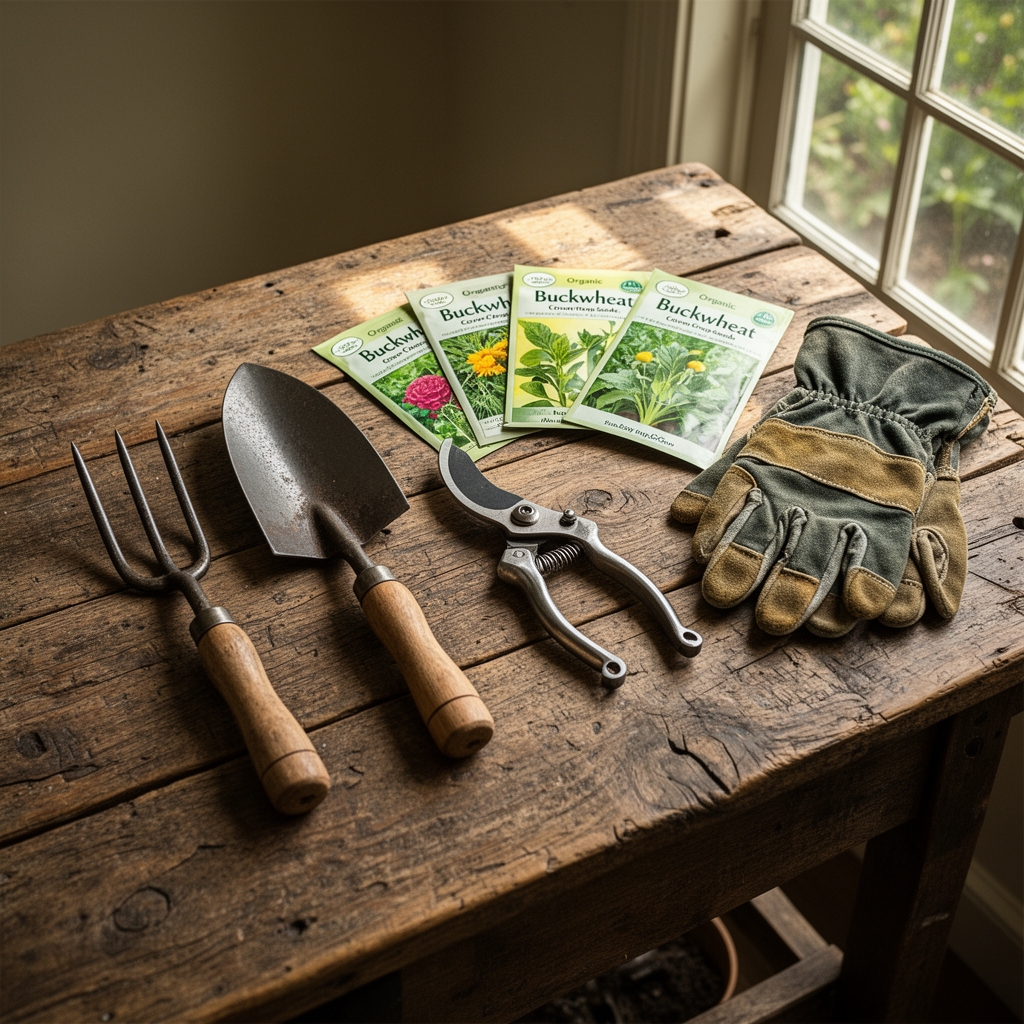
Seed selection drives establishment success. Purchase certified buckwheat seed at 2 to 3 pounds per 1,000 square feet for broadcast sowing, or 1.5 pounds for drilled rows. Avoid feed-grade seed, which often contains weed contamination and lower germination rates below 80%.
Soil pH between 5.5 and 7.0 supports optimal growth, though buckwheat tolerates a wider range of 4.8 to 8.2. Conduct a soil test to measure cation exchange capacity; buckwheat performs adequately even in soils with CEC values as low as 8 meq/100g.
Nutrient requirements remain minimal. A balanced organic fertilizer with an NPK ratio of 4-4-4 or 5-5-5 applied at 50 pounds per 1,000 square feet before seeding accelerates early biomass production. Buckwheat excretes organic acids that solubilize phosphorus bound in calcium and iron complexes, making it effective on phosphorus-deficient plots where soil tests show less than 15 ppm Bray-1 extractable P.
Mycorrhizal fungi inoculation offers limited benefit; buckwheat forms weak arbuscular mycorrhizal associations compared to grasses or legumes. Invest instead in compost at 1 cubic yard per 500 square feet to boost microbial activity and water retention.
Timing
Buckwheat functions as a warm-season annual requiring soil temperatures above 50°F for germination and above 60°F for rapid emergence. In USDA Hardiness Zones 3 through 10, sow after the last spring frost date when soil warms consistently. A 7-day average soil temperature of 55°F measured at 2-inch depth signals suitable conditions.
For northern zones (3-5), optimal seeding windows span late May through early July. Mid-latitude zones (6-7) extend planting through mid-August. Southern zones (8-10) support multiple succession plantings from March through September, avoiding only the hottest weeks above 95°F when pollen viability drops.
Plan termination 35 to 45 days after seeding, before seed set. Early flowering begins around day 28; mow or till at 10% bloom to maximize biomass while preventing volunteer regrowth. Fall plantings should mature 4 weeks before the first hard frost (28°F) to ensure adequate tissue breakdown over winter.
Phases

Sowing
Prepare a fine seedbed by tilling or raking to break clods larger than 1 inch. Buckwheat seed measures 3 to 4 mm and requires shallow placement at 0.5 to 1 inch depth. Broadcast seed evenly using a hand spreader or mechanical seeder, then rake lightly to incorporate. Alternatively, drill seed in rows spaced 6 to 8 inches apart for easier cultivation.
Water immediately after seeding with 0.5 inches to ensure seed-to-soil contact. Germination occurs within 3 to 5 days under ideal conditions (65-75°F soil temperature, consistent moisture).
Pro-Tip: Roll or lightly compact the seedbed after broadcasting to press seed into firm contact with soil particles. This step reduces germination time by 24 hours and improves stand uniformity.
Establishing
Seedlings emerge rapidly, displaying heart-shaped cotyledons within one week. Buckwheat enters vegetative growth immediately, producing true leaves by day 10. Root systems penetrate 12 to 18 inches by day 21, with lateral roots forming a dense mat in the top 6 inches.
Weed suppression becomes evident by day 14 as the canopy closes. Buckwheat's allelopathic compounds, particularly fagopyrin, inhibit germination of annual grasses and broadleaf weeds. Maintain soil moisture at 1 inch per week during this phase to support auxin distribution and apical dominance.
Pro-Tip: Scout for slug activity during the first 10 days. Buckwheat seedlings contain high moisture levels that attract slugs in humid climates. Apply iron phosphate bait at 0.5 pounds per 1,000 square feet if damage exceeds 10% of stand.
Flowering
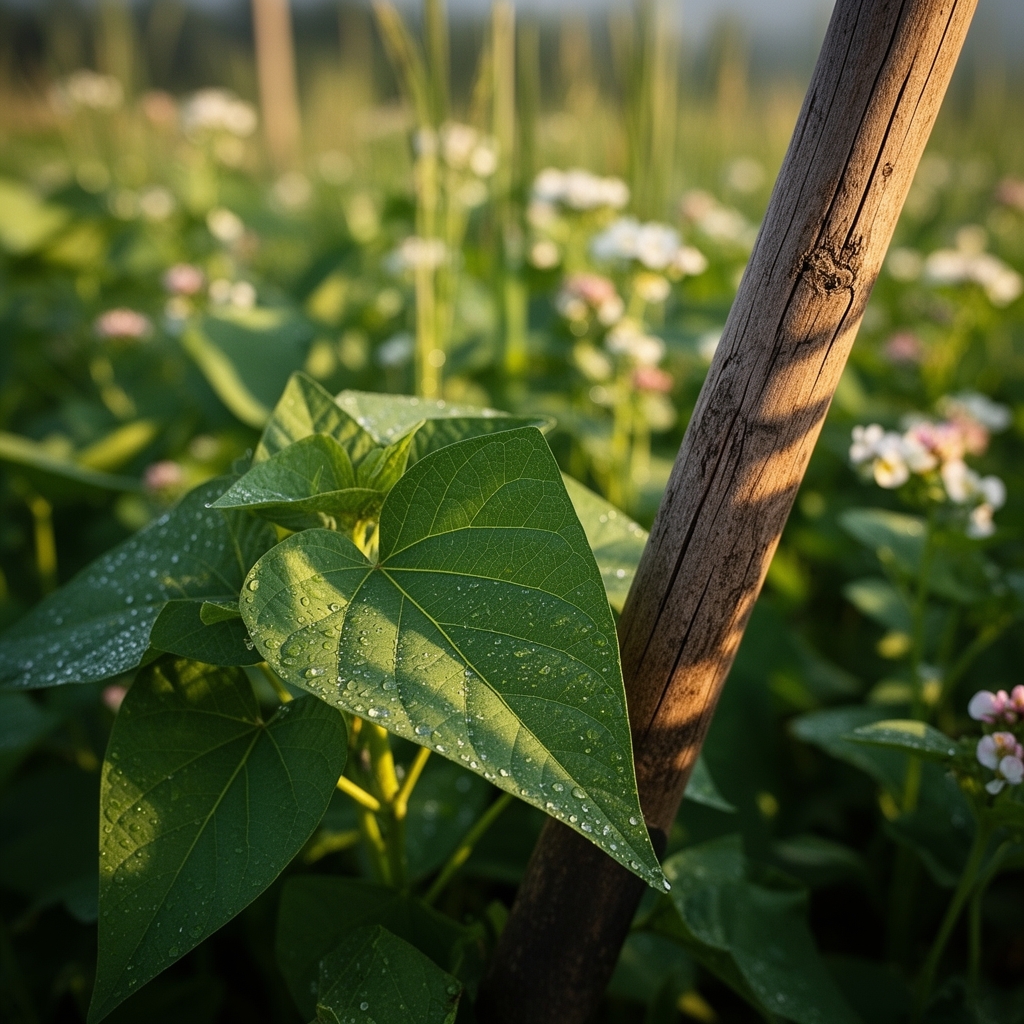
White to pale pink flowers appear 25 to 30 days post-seeding, attracting honeybees, native bees, and hoverflies. Pollinator activity peaks during morning hours (7 AM to 11 AM). This phase lasts 10 to 14 days before seed formation begins.
Terminate the cover before 20% of flowers set seed. Mow to a 3-inch stubble height, then incorporate residue within 48 hours. Alternatively, use a flail mower or undercutting tool to sever roots below the soil surface. Allow 14 to 21 days for tissue breakdown before planting subsequent crops.
Pro-Tip: Delay termination until evening when flowers close and pollinators leave the field. This practice reduces bee mortality during mowing operations.
Troubleshooting
Symptom: Yellowing leaves and stunted growth at 2 to 3 weeks post-emergence.
Solution: Indicates nitrogen deficiency or waterlogging. Side-dress with blood meal (12-0-0) at 10 pounds per 1,000 square feet if soil drains well. For saturated soils, improve drainage with shallow furrows; buckwheat cannot tolerate anaerobic conditions lasting more than 48 hours.
Symptom: Sparse germination with patchy stands.
Solution: Seed-to-soil contact failure or planting depth exceeding 1.5 inches. Overseed at 50% of original rate and water with 0.25 inches daily for 5 days. Improve seedbed preparation for future plantings by rolling after broadcast.
Symptom: Leaf edges show brown necrotic spots with chlorotic halos.
Solution: Indicates boron toxicity in soils with pH above 7.5 and boron concentrations exceeding 2 ppm. Leach soil with 2 inches of water weekly for two weeks. Select alternative covers like oats for alkaline soils.
Symptom: Sudden wilting and collapse of plants at flowering.
Solution: Root rot caused by Pythium species in poorly drained soils. No rescue treatment exists; terminate affected stand and improve drainage. Rotate to brassica covers (mustard, radish) that tolerate wet conditions better.
Symptom: Japanese beetles defoliating plants at flowering stage.
Solution: Buckwheat attracts Japanese beetles but rarely suffers economic damage due to rapid growth. Tolerate feeding unless defoliation exceeds 40%. Hand-pick beetles into soapy water (1 tablespoon dish soap per gallon) or apply neem oil at 2 tablespoons per gallon water, spraying leaf undersides at dusk.
Maintenance
Irrigation requirements total 1 to 1.5 inches per week via rainfall or supplemental watering. Monitor soil moisture at 4-inch depth; buckwheat wilts rapidly when moisture drops below 50% of field capacity but recovers within 6 hours of watering.
Weed competition poses minimal threat after day 14. Hand-pull or hoe any perennial weeds (Canada thistle, quackgrass) before they exceed 4 inches in height. Buckwheat's dense canopy shades out most annual weeds without intervention.
Nutrient supplementation remains unnecessary after establishment unless visible deficiency symptoms appear. Buckwheat scavenges residual nitrogen from previous crops, recycling 40 to 60 pounds of nitrogen per acre into biomass that releases slowly upon incorporation.
Scout weekly for aphid colonies on stem tips and leaf undersides. Populations rarely reach economic thresholds but can vector viral diseases if present in high numbers (>100 aphids per plant). Spray insecticidal soap (2% potassium salts of fatty acids) if colonies expand rapidly.
FAQ
How long does buckwheat take to suppress weeds?
Buckwheat suppresses weeds within 14 days of emergence when seeded at proper density (2-3 pounds per 1,000 square feet). The canopy closes rapidly, shading weed seedlings and releasing allelopathic compounds.
Can I plant crops immediately after terminating buckwheat?
Wait 14 to 21 days after incorporation before planting. Buckwheat residue decomposes rapidly but releases phenolic compounds during breakdown that temporarily inhibit seed germination. Fall plantings decompose over winter, eliminating wait times for spring crops.
Does buckwheat fix nitrogen like legumes?
No. Buckwheat does not form nitrogen-fixing nodules. It recycles existing soil nitrogen into biomass and solubilizes phosphorus through root exudates. Incorporate buckwheat before seed set to return captured nitrogen to the soil.
What is the best buckwheat variety for cover cropping?
Common buckwheat (Fagopyrum esculentum) serves most cover crop applications. Japanese buckwheat matures 5 days faster but produces less biomass. Mancan and Manor varieties offer uniform maturity and lodging resistance.
Will buckwheat survive frost?
Buckwheat dies at the first light frost (32°F). Tissues turn black and collapse, creating surface mulch. This frost sensitivity makes buckwheat ideal for fall termination without tillage in northern climates.