5 Easy Ways How to Apply Bone Meal
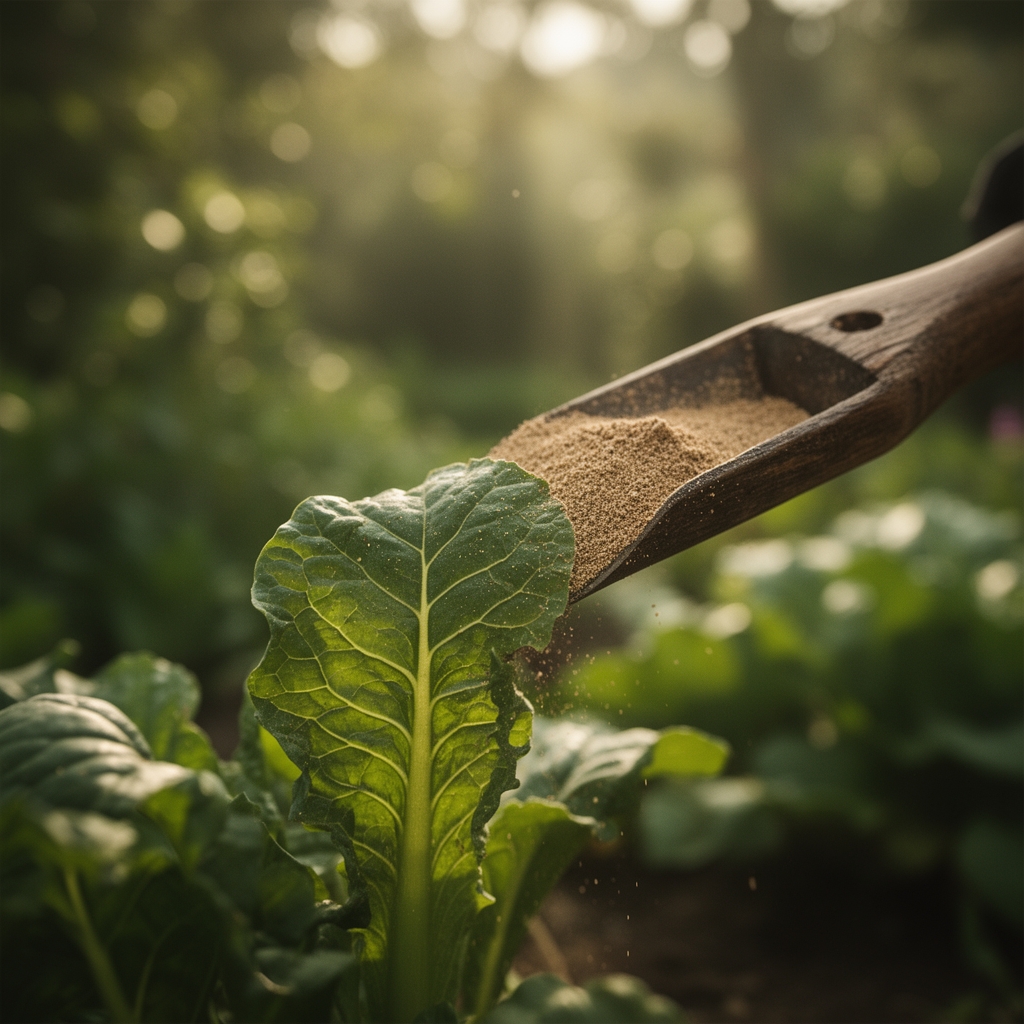
Bone meal releases a fine, chalky dust that coats your palms when you dig bare fingers into the bag. This ancient soil amendment carries phosphorus and calcium to roots in slow, steady pulses over months, feeding bulbs, transplants, and perennials without the spike-and-crash of synthetic fertilizers. Learning how to apply bone meal correctly transforms garden soil into a nutrient bank where root systems draw exactly what they need. The granular texture settles between soil particles, colonized by mycorrhizal fungi that mine phosphate ions and transfer them to plant roots in exchange for sugars.
Materials
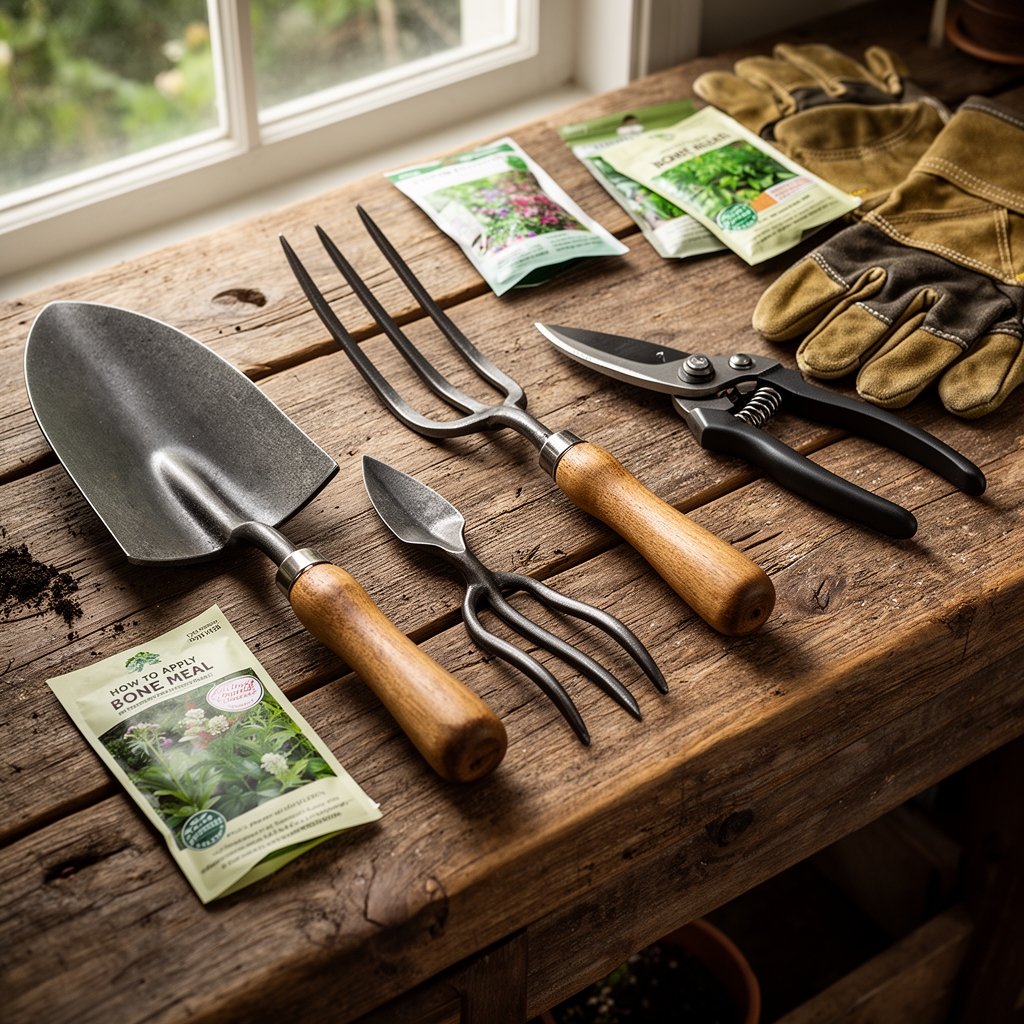
Select bone meal with an NPK ratio near 3-15-0 or 4-12-0. Steamed bone meal processes faster than raw forms because high-temperature rendering breaks collagen bonds and exposes mineral surfaces to microbial action. Check the guaranteed analysis panel for total phosphorus (P2O5) content between 12 and 18 percent by weight.
Pair bone meal with materials that adjust pH and cation exchange capacity. For acidic soils below 6.0, mix bone meal with dolomitic lime at a 1:2 ratio to raise pH while adding magnesium. For neutral to alkaline soils above 7.0, blend bone meal with elemental sulfur at 1:0.25 to slowly lower pH over eight weeks. Add aged compost at 20 percent by volume to increase organic matter and buffer nutrient release.
Hardiness Zone requirements shift application timing. Zones 3-5 demand fall application to allow phosphorus migration before frost locks the soil. Zones 6-8 accept spring or fall windows. Zones 9-11 benefit from late-winter application when cool-season crops root aggressively but before heat slows microbial activity.
Timing
Match bone meal applications to your USDA Hardiness Zone and last frost date. In Zones 3-5, apply six weeks before first frost (late August through mid-September). Cold-hardy perennials like peonies and ornamental alliums absorb phosphorus in autumn when auxin distribution shifts to root growth.
Zones 6-8 allow dual windows. Spring application occurs two weeks before last frost, when soil temperature reaches 45°F and phosphate-solubilizing bacteria resume activity. Fall application targets four weeks before first frost, syncing with root expansion in cool temperatures.
Zones 9-11 require winter application between December and February. Summer heat above 85°F reduces microbial populations that convert bone meal into plant-available phosphate. Target soil temperature between 55°F and 70°F for peak mineralization rates.
Phases

Sowing
Broadcast 5 pounds of bone meal per 100 square feet of prepared bed. Incorporate to 6-inch depth with a broadfork or tiller. The calcium in bone meal neutralizes aluminum toxicity in acidic soils, allowing radicles to penetrate without stunting. Water immediately with 1 gallon per square foot to initiate enzyme activity at particle surfaces.
Pro-Tip: Inoculate bone meal with Rhizophagus irregularis at 2 ounces per 10 pounds. This arbuscular mycorrhizal fungus extends hyphal networks 40 times the root surface area, intercepting phosphorus that would otherwise bind to clay particles.
Transplanting
Dig planting holes 2 inches wider than root balls. Place 2 tablespoons of bone meal at the bottom of each hole for container plants or bareroot stock. Cover bone meal with 1 inch of native soil to prevent direct root contact that can cause tip burn from concentrated calcium. Position root crown at grade and backfill, tamping gently.
Pro-Tip: Mix bone meal with rock phosphate at 1:1 for extended feeding. Rock phosphate releases over 24 months while bone meal depletes in 4 to 6 months, creating a phosphorus gradient that sustains blooming perennials.
Establishing
Topdress 1 tablespoon per square foot around established plants at the drip line, where feeder roots concentrate. Scratch into the top 2 inches with a hand cultivator. Apply once per growing season for perennials, twice for heavy feeders like tomatoes and dahlias. Avoid contact with stems; calcium and phosphorus concentrations can desiccate green tissue.
Pro-Tip: Prune lateral roots at 30-degree angles when establishing trees. Slanted cuts expose more cambium for bone meal to stimulate auxin production, accelerating callus formation and secondary root initiation.
Troubleshooting
Symptom: Purple or reddish leaf undersides in young plants.
Solution: Phosphorus deficiency. Apply 3 tablespoons bone meal per plant and water with 0.5 gallons. Symptoms resolve in 10 to 14 days as orthophosphate ions enter xylem flow.
Symptom: Blossom end rot in tomatoes and peppers.
Solution: Calcium transport failure despite adequate soil levels. Side-dress 2 tablespoons bone meal 6 inches from stem base. Maintain consistent soil moisture at 1 inch per week to enable calcium uptake through transpiration stream.
Symptom: Chlorotic leaf margins with green veins.
Solution: Micronutrient lockout from excess phosphorus. Cease bone meal application. Foliar spray chelated iron at 1 tablespoon per gallon weekly for three weeks to bypass root uptake interference.
Symptom: Weak stems and lodging in corn or sunflowers.
Solution: Potassium deficiency induced by high phosphorus ratios. Amend with greensand or kelp meal at 4 pounds per 100 square feet to restore NPK balance. Bone meal alone skews nutrient ratios without potassium sources.
Maintenance
Apply 3 pounds bone meal per 100 square feet annually for established perennial beds. Reapply every 18 months for shrubs and trees, distributing evenly under the canopy to the drip line. Increase application frequency on sandy soils with low cation exchange capacity, where leaching removes phosphorus below the root zone.
Water at 1 inch per week during active growth. Drought stress closes stomata and halts nutrient transport, stranding phosphorus in soil solution. Mulch with 3 inches of shredded hardwood bark to moderate soil temperature and sustain microbial populations that mineralize bone meal.
Test soil pH annually. Bone meal performs best between 6.0 and 7.0 where phosphorus solubility peaks. Below 5.5, aluminum and iron bind phosphate into insoluble compounds. Above 7.5, calcium phosphate precipitates out of solution.
FAQ
How much bone meal per tomato plant?
Mix 3 tablespoons into each planting hole. Side-dress with 2 tablespoons at first flower set and again when fruits reach golf-ball size.
Can bone meal burn plants?
No. The slow-release nature prevents fertilizer burn, but high calcium concentrations can desiccate stems on direct contact. Always buffer with soil.
Does bone meal attract animals?
Minimally processed bone meal retains fats that attract dogs and rodents. Steamed bone meal reduces odor. Incorporate fully into soil rather than leaving exposed.
How long does bone meal last in soil?
Four to six months under normal conditions. Clay soils with high cation exchange capacity extend availability to eight months. Sandy soils deplete reserves in three months.
Is bone meal organic?
Yes, when sourced from untreated livestock bones. OMRI-listed products meet organic certification standards. Check labels for synthetic additives or chemical processing agents.