5 Pro Tips How to Grow Winter Rye
The frozen soil cracks under the weight of November rain, and most gardeners retreat indoors. Winter rye (Secale cereale) thrives in this moment. Broadcast correctly, these seeds germinate when temperatures hover between 38 and 50 degrees Fahrenheit, establishing a root system that mines nitrogen and prevents erosion through March. Learning how to grow winter rye transforms fallow ground into a living factory of organic matter. The crop requires minimal fertility yet produces up to 10,000 pounds of biomass per acre. Soil structure improves measurably within a single season as fibrous roots create macropores for water infiltration and oxygen exchange.
Materials
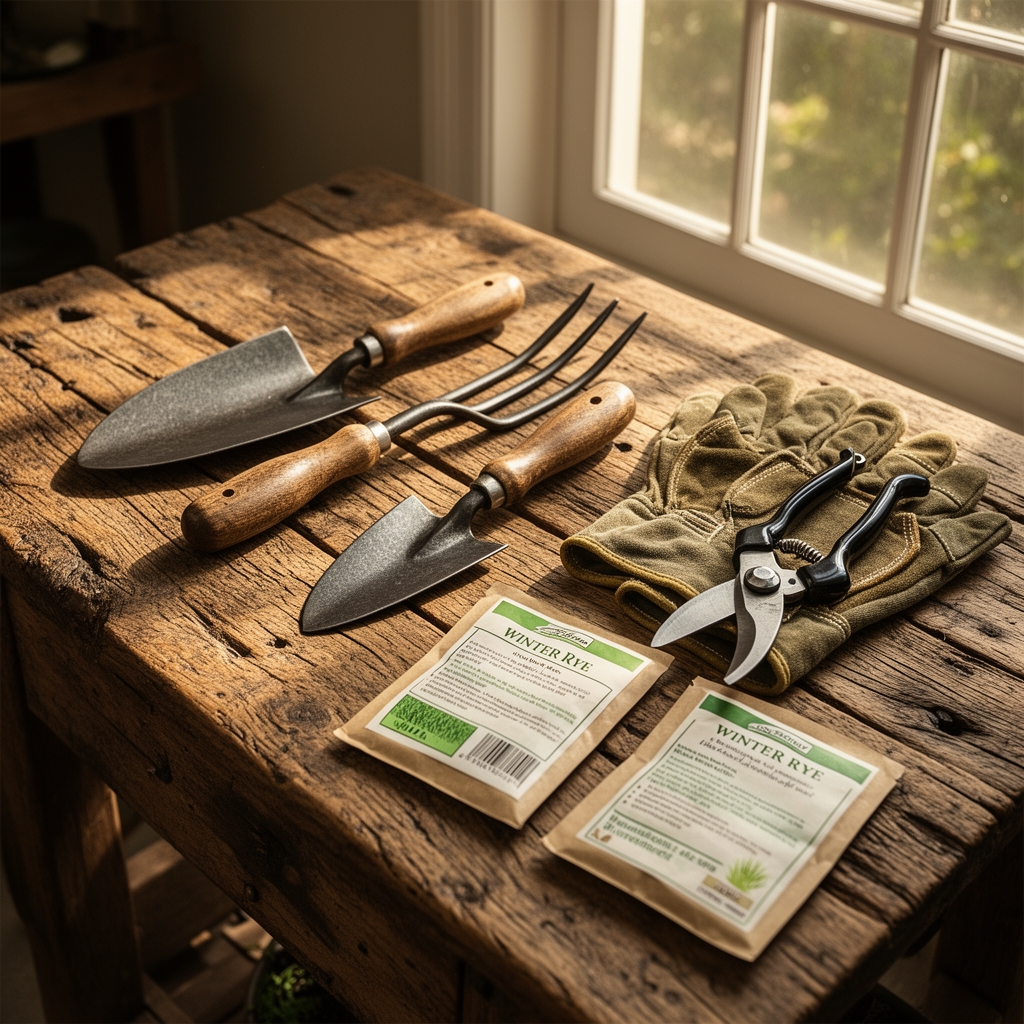
Winter rye tolerates a pH range of 5.0 to 7.0, with optimal performance between 6.0 and 6.5. Test your soil four weeks before seeding to determine if lime or sulfur amendments are necessary. Cation exchange capacity affects nutrient retention; soils below 10 meq/100g benefit from compost additions at a rate of 1 cubic yard per 500 square feet.
Seed density dictates success. Plan for 60 to 120 pounds per acre for cover cropping, or 90 to 120 pounds when suppressing weeds is the primary goal. Select certified seed to minimize ergot contamination. Ergot is a fungal pathogen that produces alkaloid-laden sclerotia and compromises grain safety.
Fertility requirements remain modest. A baseline application of 2-3-2 organic fertilizer at 50 pounds per 1,000 square feet supplies sufficient phosphorus for root development. Avoid high-nitrogen inputs at seeding; excessive nitrogen stimulates vegetative growth at the expense of cold hardiness. If soil tests reveal phosphorus levels below 30 ppm, incorporate bone meal (0-12-0) at 10 pounds per 1,000 square feet. Potassium supports winter survival; where K levels fall below 150 ppm, apply greensand (0-0-3) at 20 pounds per 1,000 square feet.
Mycorrhizal inoculants improve nutrient uptake. Choose an endomycorrhizal blend containing Glomus species. Apply at seeding at a rate of 0.5 pounds per acre.
Timing
Winter rye suits USDA Hardiness Zones 3 through 10. Optimal seeding windows vary by latitude. In Zones 3 through 5, sow between August 15 and September 30. Zones 6 and 7 allow planting from September 1 through October 31. Zones 8 through 10 extend the window to November 30.
Frost-date precision matters. Seed 4 to 6 weeks before the first hard freeze (28 degrees Fahrenheit or lower). This interval allows plants to reach the three-leaf stage before dormancy. Adequate vegetative development ensures survival when temperatures drop below 20 degrees Fahrenheit.
Photoperiod sensitivity is minimal compared to spring cereals. Winter rye germinates and establishes successfully with less than 10 hours of daylight. This trait makes late-season seeding feasible in northern climates where other cover crops fail.
Phases

Sowing
Prepare the seedbed by removing residue and creating a firm surface. Broadcast seeds evenly at the specified rate. Rake lightly to achieve 0.5 to 1 inch of soil coverage. Rolling the seeded area improves seed-to-soil contact and accelerates germination.
Pro-Tip: Interseeding into standing crops is effective. Broadcast rye 10 days before harvesting soybeans or late-season vegetables. The canopy protects seeds from bird predation while allowing sufficient light penetration for germination.
Establishment
Germination occurs in 5 to 7 days when soil temperatures remain above 40 degrees Fahrenheit. Seedlings emerge with a single coleoptile, followed by true leaves at 7- to 10-day intervals. Roots penetrate to 6 inches within three weeks.
Auxin distribution drives early root architecture. The seminal root system establishes first, followed by nodal (crown) roots that form 0.5 to 1 inch below the soil surface. Crown depth affects winter survival; shallow crowns are vulnerable to freeze-thaw heaving. If seeded too shallow, apply 0.25 inches of compost over rows to insulate crowns.
Pro-Tip: Delay mowing until biomass exceeds 1,000 pounds per acre (approximately 8 inches of growth). Early mowing reduces root exudate production and limits benefits to soil microbiology.
Overwintering
Rye enters dormancy when temperatures consistently fall below 32 degrees Fahrenheit. Metabolic activity slows but does not cease. Root respiration continues at reduced rates, releasing organic acids that solubilize phosphorus. Snow cover insulates crowns and prevents desiccation.
Spring green-up begins when soil temperatures reach 38 degrees Fahrenheit. Rapid growth resumes; plants may gain 1 inch of height per day under favorable conditions.
Pro-Tip: Terminate rye 10 to 14 days before planting spring crops. Flail-mow or crimp at the boot stage (before pollen shed) to prevent seed set. Incorporate residue to a depth of 2 to 4 inches to accelerate decomposition.
Troubleshooting
Symptom: Yellowing leaves with interveinal chlorosis in early growth.
Solution: Nitrogen deficiency. Side-dress with blood meal (12-0-0) at 5 pounds per 1,000 square feet. Water immediately to initiate mineralization.
Symptom: Stunted growth with purpling on leaf margins.
Solution: Phosphorus immobilization in cold soils. Apply liquid fish emulsion (5-1-1) diluted 1:4 as a foliar spray. Phosphorus absorption improves when applied directly to foliage at temperatures below 50 degrees Fahrenheit.
Symptom: Lodging (collapsed stems) in late spring.
Solution: Excessive nitrogen or weak stem development. Reduce nitrogen inputs and incorporate silica amendments (diatomaceous earth at 10 pounds per 1,000 square feet) at seeding. Silica strengthens cell walls and reduces lodging risk.
Symptom: Ergot sclerotia (dark, elongated structures replacing grain).
Solution: Fungal infection during flowering. Remove affected plants immediately. Avoid planting rye in consecutive years on the same site. Ergot sclerotia remain viable in soil for up to one year.
Symptom: Poor germination despite adequate moisture.
Solution: Seed depth exceeds 1.5 inches or soil crusting prevents emergence. Re-seed shallow and break crusts with light raking after rain events.
Maintenance
Irrigation is rarely necessary except in arid climates. If autumn rainfall totals less than 1 inch per month, apply 0.5 inches of water weekly until dormancy. Spring moisture is typically sufficient; supplemental irrigation is only needed if weekly rainfall falls below 0.75 inches during active growth.
Weed competition is minimal once rye establishes. Allelopathic compounds in root exudates suppress germination of small-seeded annuals. Dense stands shade out early-season weeds.
Monitor for aphids in early spring. Populations above 20 aphids per stem justify intervention. Release lacewing larvae (1,000 per acre) or spray insecticidal soap (potassium salts of fatty acids at 2 percent concentration).
FAQ
When is the best time to plant winter rye?
Sow 4 to 6 weeks before the first hard freeze, typically mid-August through October in most temperate zones.
How deep should I plant winter rye seeds?
Target 0.5 to 1 inch depth. Deeper planting delays emergence and reduces stand uniformity.
Can I grow winter rye in clay soil?
Yes. Winter rye tolerates heavy soils better than most cereals. Its root system improves drainage over successive seasons.
Do I need to fertilize winter rye?
Baseline fertility (2-3-2 at 50 pounds per 1,000 square feet) supports establishment. Avoid high nitrogen at seeding.
How do I terminate winter rye before planting crops?
Mow or crimp at the boot stage, 10 to 14 days before planting. Incorporate residue shallowly to accelerate breakdown.