5 Simple Ways How to Use Agricultural Lime
Agricultural lime transforms acidic soil into a balanced growing medium by releasing calcium carbonate into the root zone. Decades of hardwood decomposition and seasonal rainfall push pH values below 5.5 across much of the temperate Northeast and Pacific Northwest. Learning how to use agricultural lime corrects this acidity, enabling nutrient uptake and stimulating beneficial microbial populations that convert organic matter into plant-available nitrogen. The white powder dissolves slowly, raising pH over three to six months while improving soil structure through enhanced cation exchange capacity.
Materials
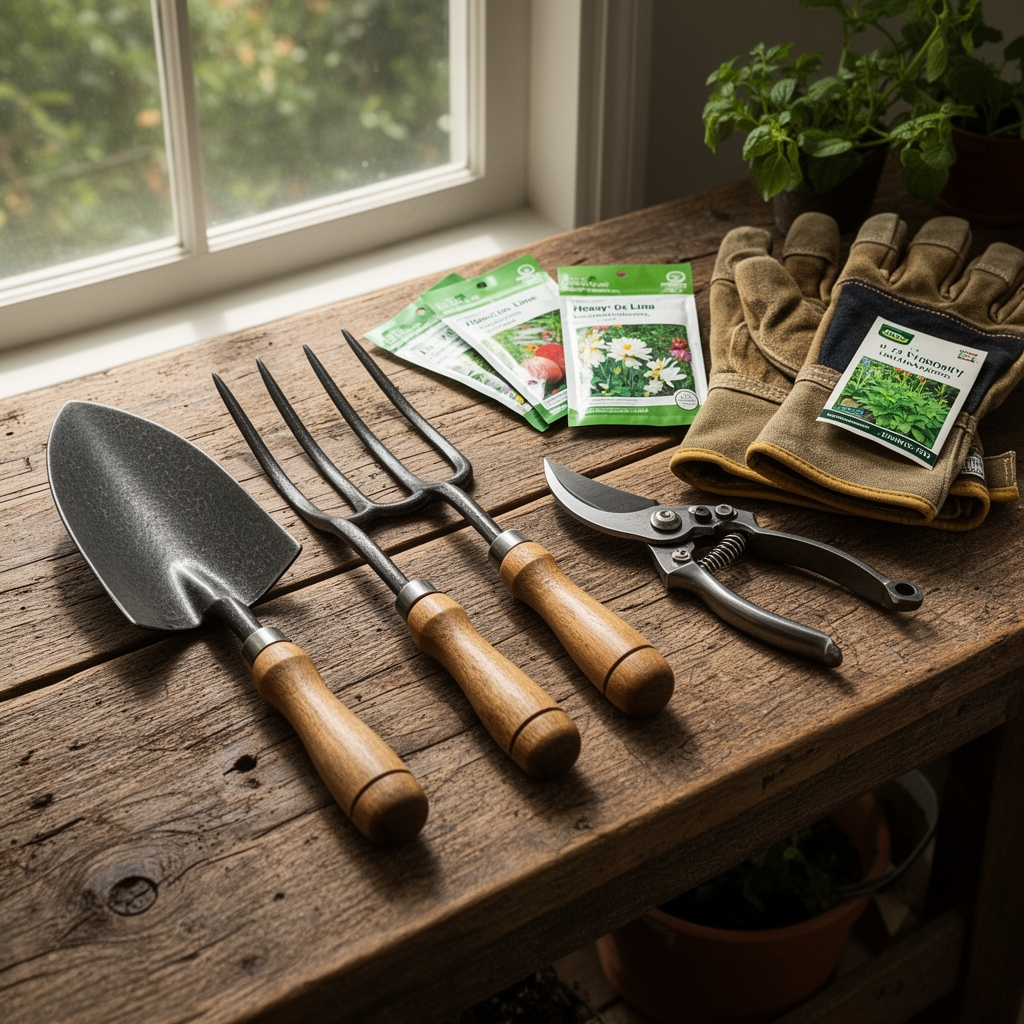
Selecting the correct lime formulation depends on existing soil pH and crop tolerance. Calcitic lime (CaCO3) supplies calcium and raises pH by 1.0 to 1.5 units per 50-pound application across 1,000 square feet. Dolomitic lime (CaMg(CO3)2) adds magnesium alongside calcium, ideal for sandy soils with cation exchange capacities below 10 meq/100g. Hydrated lime (Ca(OH)2) reacts within weeks but risks over-application burns; reserve it for emergency pH correction in early spring.
Pair lime applications with balanced organic amendments. A 5-5-5 composted poultry manure delivers nitrogen, phosphorus, and potassium while supplying humic acids that stabilize newly adjusted pH levels. Bone meal at 3-15-0 complements lime's calcium load for fruiting crops. Kelp meal (1-0.5-2.5) introduces trace minerals and cytokinins that promote auxin distribution in root tips. Mycorrhizal inoculants colonize roots within 14 days when soil pH reaches 6.0 to 7.0, the optimal range for fungal enzyme activity.
Timing
Frost-free dates and hardiness zones dictate lime application windows. In Zones 3-5, spread lime three to four months before last frost (mid-February to mid-March) to allow dissolution before spring planting. Zones 6-8 permit late autumn applications (October through November) when soil temperatures drop below 55 degrees Fahrenheit and microbial activity slows, preventing nitrogen tie-up during decomposition. Zones 9-10 require lime during the dry season (June through August) since winter rains leach calcium too rapidly for effective pH adjustment.
Test soil pH every 24 months using a calibrated electronic meter or laboratory analysis. Collect samples from the top 6 inches of the root zone, avoiding debris and surface mulch. Record readings in multiple locations; variation exceeding 0.5 pH units signals uneven lime distribution from prior applications.
Phases

Broadcast Application
Spread lime evenly across bare soil before tilling or planting. Use a drop spreader calibrated to 25 pounds per 500 square feet for moderate acidity (pH 5.5-6.0). Increase to 50 pounds per 500 square feet for severe acidity (pH below 5.0). Incorporate lime 4 to 6 inches deep using a rototiller or broadfork to accelerate contact with soil particles. Water the treated area with 0.5 inches to settle particles into aggregates.
Pro-Tip: Apply lime perpendicular to prevailing wind direction to minimize drift and ensure uniform coverage. Mark application swaths with stakes every 10 feet to prevent overlap.
Row Banding
Concentrate lime along planting rows for high-value crops in large gardens. Dig trenches 4 inches wide and 6 inches deep, spacing rows 24 to 36 inches apart. Blend 2 pounds of calcitic lime per 10 linear feet with native soil and backfill trenches two weeks before transplanting. This technique reduces total lime requirements by 40 percent while targeting the immediate root zone.
Pro-Tip: Mix lime with greensand (0-0-3 plus iron and trace minerals) in trenches to buffer pH shifts and provide slow-release potassium over 90 days.
Top Dressing
Maintenance applications sustain pH levels in established perennial beds and lawns. Scatter 10 pounds of pelletized lime per 1,000 square feet in early spring or late autumn. Pellets dissolve over 8 to 12 weeks, minimizing dust and improving handling. Rake lightly to settle granules into the thatch layer without disturbing surface roots.
Pro-Tip: Water with 0.25 inches immediately after top dressing to activate pellet breakdown. Avoid applications before heavy rainfall forecasts exceeding 1 inch to prevent runoff into waterways.
Troubleshooting
Symptom: Yellowing older leaves with green veins (interveinal chlorosis).
Solution: Over-liming has induced iron deficiency by raising pH above 7.5. Apply chelated iron at 1 ounce per gallon as a foliar spray every 10 days until new growth returns to dark green.
Symptom: Stunted root development and poor nodulation in legumes.
Solution: Excess magnesium from dolomitic lime inhibits calcium uptake. Switch to calcitic lime and add gypsum (CaSO4) at 5 pounds per 100 square feet to restore calcium-magnesium ratios below 3:1.
Symptom: Aluminum toxicity symptoms (brown root tips, wilting despite adequate moisture).
Solution: Insufficient lime application in strongly acidic soils (pH below 5.0). Retest soil and apply additional calcitic lime at 75 pounds per 1,000 square feet. Wait 60 days before replanting.
Symptom: White crust forming on soil surface after lime application.
Solution: Hydrated lime over-application or inadequate incorporation. Irrigate with 1 inch of water to flush excess calcium below the root zone. Incorporate 2 inches of compost to buffer remaining lime.
Maintenance
Monitor pH every 18 to 24 months in annual beds and every 36 months in perennial plantings. Reapply lime when pH drops below 6.0 for most vegetables or below 5.5 for acid-loving crops like blueberries. Supply 1 inch of water weekly during active growth to support calcium transport through the xylem. Mulch with 2 inches of shredded bark to moderate soil temperature and reduce leaching of calcium from the root zone during heavy rainfall events exceeding 2 inches per week.
Rotate lime sources every three to five years to balance calcium and magnesium ratios. Alternate between calcitic and dolomitic formulations based on soil test recommendations. Avoid simultaneous application of lime and high-nitrogen fertilizers; separate applications by 30 days to prevent ammonia volatilization and nitrogen loss.
FAQ
How long does agricultural lime take to change soil pH?
Powdered calcitic lime adjusts pH within 60 to 90 days. Pelletized formulations require 90 to 120 days. Hydrated lime reacts in 14 to 21 days but demands precise dosing.
Can I apply lime and fertilizer together?
No. Lime reduces nitrogen availability from ammonium-based fertilizers through volatilization. Apply lime 30 days before or after fertilization.
What pH range works best for vegetable gardens?
Most vegetables thrive between 6.2 and 6.8. Brassicas tolerate 6.5 to 7.0. Potatoes prefer 5.5 to 6.0 to suppress scab disease.
How much lime does clay soil need compared to sandy soil?
Clay requires 50 percent more lime than sandy loam due to higher cation exchange capacity. Test results specify exact rates based on soil texture.
Does lime expire?
Bagged lime remains effective indefinitely if stored dry. Moisture exposure causes premature reaction, reducing field efficacy by 30 to 50 percent.