6 Simple Steps to Plant Green Manure
Green manure transforms bare soil into a living reservoir of nutrients, suppressing weeds while fixing atmospheric nitrogen through specialized root nodules. The practice dates to ancient Rome, where farmers plowed under faba beans before grain crops. Modern gardeners who follow the proper steps to plant green manure can increase soil organic matter by 2-3% in a single season, measurably improving cation exchange capacity and water retention across all soil types.
Materials
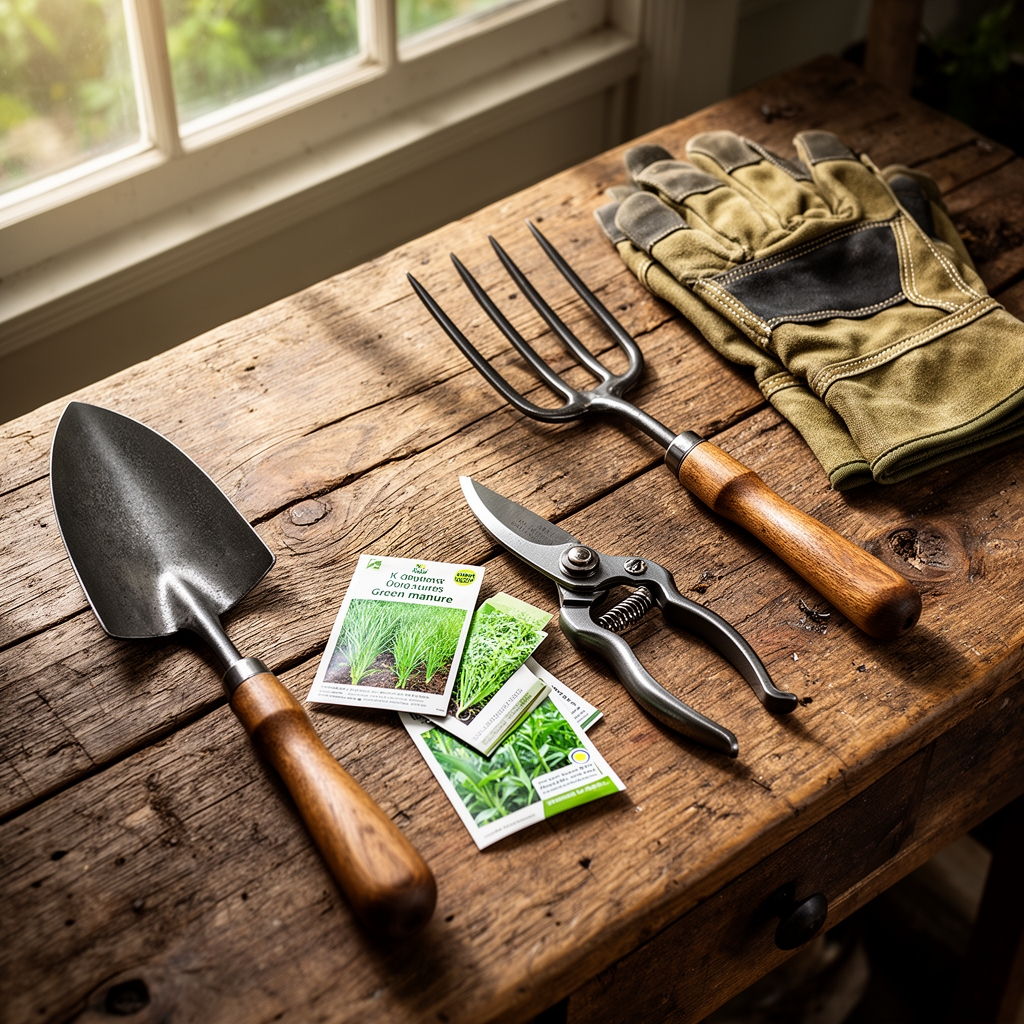
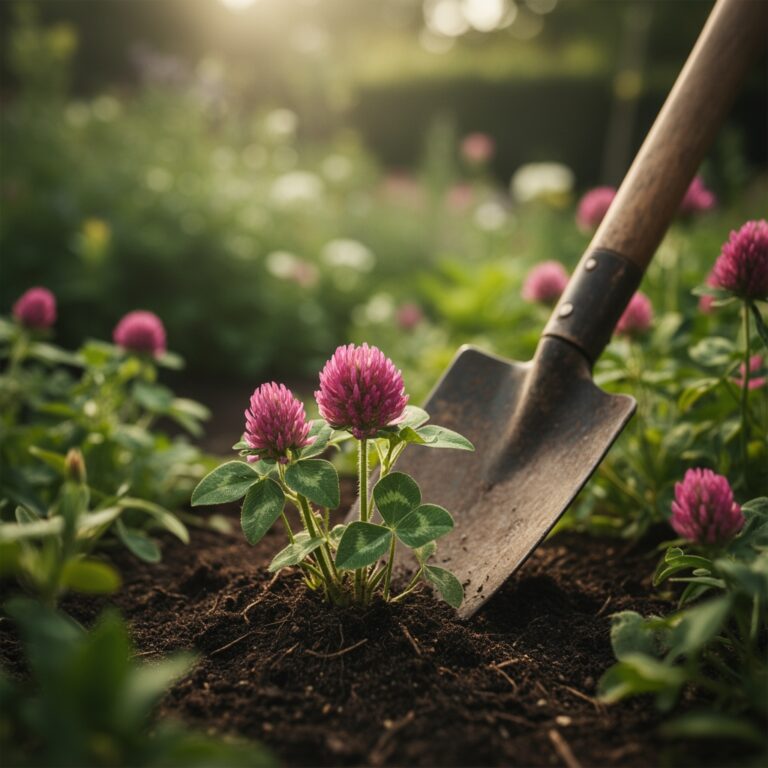
Select seed species based on your soil pH and seasonal window. Legumes like crimson clover (Trifolium incarnatum) and hairy vetch (Vicia villosa) thrive in pH 6.0-7.0 and contribute 80-150 pounds of nitrogen per acre through rhizobial symbiosis. Grasses such as winter rye (Secale cereale) tolerate pH 5.0-7.5 and produce dense fibrous roots that scavenge residual nitrogen, preventing leaching. Buckwheat (Fagopyrum esculentum) grows rapidly in pH 5.5-7.0 and mobilizes phosphorus from insoluble compounds.
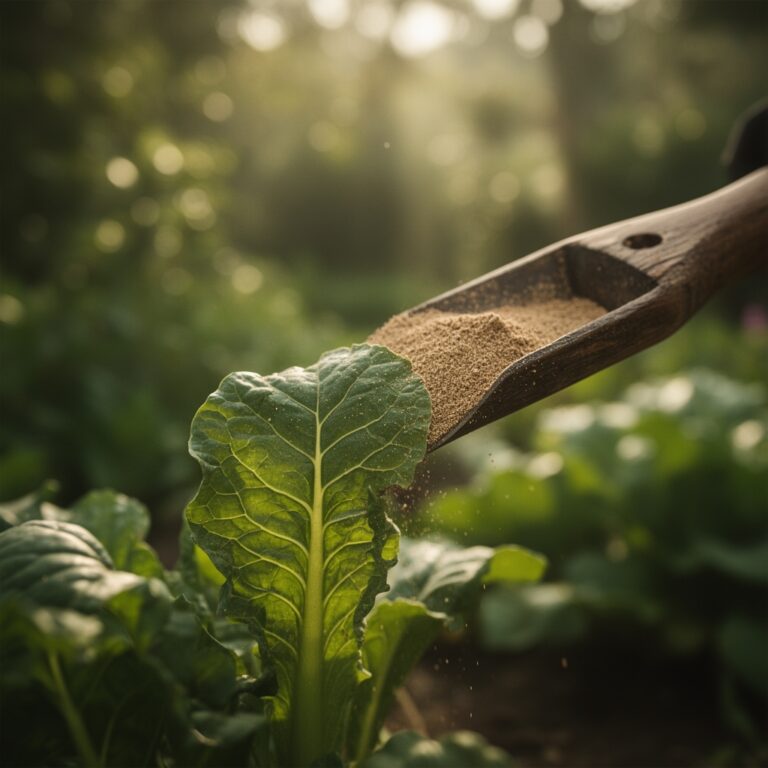
Broadcast spreader or hand-crank seeder ensures even distribution at recommended densities. Standard application rates: crimson clover at 15-20 pounds per acre, winter rye at 60-120 pounds per acre, and field peas at 50-100 pounds per acre. A soil test kit measuring N-P-K and micronutrients guides amendments. Add rock phosphate (0-3-0) at 500 pounds per acre if phosphorus tests below 25 ppm. Sulfur or lime adjusts pH by approximately one unit per 10 pounds per 100 square feet.
Inoculant powder contains strain-specific Rhizobium bacteria. Match inoculant to legume species: Rhizobium leguminosarum for field peas and vetches, Rhizobium trifolii for clovers. Mix inoculant with seed immediately before planting to maintain bacterial viability. A garden rake or tine harrow incorporates seed to the correct depth.
Timing
Hardiness zones determine optimal planting windows. In zones 3-5, sow cold-hardy species like winter rye and hairy vetch 4-6 weeks before the first hard freeze, typically mid-August through September. These species require vernalization and resume growth when soil temperatures exceed 40°F in spring. Zones 6-7 allow planting through mid-October for winter survival. Zones 8-10 support year-round green manure rotations; plant cool-season legumes from October through February.
Spring green manure follows last frost dates. Sow field peas, oats, and spring vetch when soil reaches 40-45°F, usually 4-6 weeks before the last frost. These mature in 60-90 days. Summer green manure like buckwheat and cowpeas requires soil temperatures above 60°F. Buckwheat reaches flowering in just 35-40 days, making it ideal for short windows between cash crops.
Calculate termination dates by working backward from your next planting. Allow 2-3 weeks for initial decomposition of succulent growth, 4-6 weeks for fibrous or woody material. Mycorrhizal fungi colonize decomposing roots, extending hyphal networks that benefit subsequent crops.
Phases

Sowing: Clear existing vegetation through shallow cultivation or occultation with tarps for 2-4 weeks. Rake the soil to create a firm seedbed with pea-sized aggregates. Broadcast seed evenly across the prepared area. Smaller seeds like clover require surface contact; lightly rake to press seeds into the top 1/4 inch. Larger seeds such as field peas and fava beans need 1-2 inch depth. Roll or tamp the surface to ensure seed-soil contact, which triggers imbibition and germination.
Pro-Tip: Apply inoculant to legume seeds using a sticking agent (molasses diluted 1:10 with water) to coat each seed uniformly. This increases nodulation rates by 40-60% compared to dry inoculant.
Germination: Most green manures germinate within 5-14 days when soil moisture remains consistent. Water newly seeded areas with 0.5 inches if no rain falls within 3 days of planting. Emergence occurs fastest at optimal temperatures: 50-65°F for cool-season species, 70-85°F for warm-season varieties. Thin stand density is acceptable; green manures need not form a perfect lawn.
Pro-Tip: Interseeding multiple species creates structural diversity. Combine a deep-rooted legume with a fibrous-rooted grass at 60:40 ratio by weight. The grass stabilizes soil while the legume fixes nitrogen through auxin-regulated nodule development.
Establishing: Monitor growth for 3-4 weeks post-emergence. Legumes develop visible nodules on lateral roots once Rhizobium colonization succeeds. Cut a nodule cross-section; pink or red interior indicates active nitrogen fixation via leghemoglobin. White or green nodules are non-functional. Growth rate accelerates as day length and temperature align with species requirements. Grasses tiller extensively, producing 3-8 stems per original seed. Legumes branch and initiate flower buds.
Pro-Tip: Terminate green manure at early flowering for optimal carbon-to-nitrogen ratio (20:1 to 25:1). Younger tissue decomposes within 2-3 weeks. Mature, lignified stems require 6-8 weeks and may immobilize nitrogen temporarily.
Troubleshooting
Symptom: Poor germination with sparse stand establishment.
Solution: Test seed viability before purchase; quality seed shows >85% germination. Check planting depth; seeds buried too deep exhaust energy reserves before reaching light. Soil crusting prevents emergence. Break crust gently with a rake or apply 1/4 inch of compost as mulch.
Symptom: Yellowing foliage on legumes despite adequate water.
Solution: Nitrogen deficiency indicates failed nodulation. Inoculant may have expired or been applied to seed treated with fungicides. Side-dress with blood meal (12-0-0) at 2 pounds per 100 square feet as a temporary fix. Re-inoculate with fresh Rhizobium at the next planting.
Symptom: Aphid colonies on succulent growth tips.
Solution: Green manure attracts aphids but is typically terminated before populations peak. Beneficial insects like ladybugs and lacewings establish during the green manure phase. Tolerate minor infestations. Spray insecticidal soap (2% potassium salts of fatty acids) only if aphids spread to adjacent crops.
Symptom: Slow spring regrowth of winter-sown species.
Solution: Soil temperatures below 40°F halt growth. Wait 7-10 days after consistent daily highs exceed 50°F. Apply 1/4 inch compost tea to stimulate soil microbial activity. Avoid excessive nitrogen; it reduces stress tolerance.
Symptom: Patchy growth with bare soil exposed.
Solution: Increase seeding rate by 25% in compacted or low-fertility soils. Aerate with a broadfork before seeding to improve root penetration. Mix fine seeds with sand (1:4 ratio) for more uniform broadcasting.
Maintenance
Irrigate only during prolonged drought. Provide 1 inch of water per week if rainfall is absent for 10-14 days. Overwatering encourages shallow rooting and reduces nitrogen fixation efficiency. Monitor soil moisture at 4-6 inch depth; green manure wilts slightly but recovers overnight when roots access deeper moisture.
Terminate green manure by mowing or cutting at ground level 2-4 weeks before planting the next crop. Leave clippings on the surface as mulch for 2-3 days, then incorporate with a spading fork or tiller to 4-6 inch depth. Avoid tilling when soil is saturated; compaction destroys aggregates. Flail mowing chops material into 2-4 inch pieces, accelerating decomposition. Alternatively, use a sickle bar mower for large areas, then crimp stems to break the cuticle and speed desiccation.
For no-till systems, cut green manure at the soil surface and leave as a thick mat. Plant subsequent crops directly through the residue using a dibber or soil knife. Decomposition occurs over 4-8 weeks, releasing nutrients gradually. Biennial green manures like sweet clover are mowed in the second spring after substantial root mass develops.
FAQ
When should I plant green manure?
Plant cold-hardy species 4-6 weeks before the first hard freeze in fall. Sow spring green manure when soil reaches 40°F, typically 4-6 weeks before the last frost. Summer varieties need soil temperatures above 60°F.
How long does green manure take to decompose?
Succulent growth mowed at early flowering decomposes in 2-3 weeks. Mature, woody stems require 4-6 weeks. Soil temperature and moisture influence decomposition rate; microbial activity peaks at 60-85°F.
Can I plant vegetables immediately after tilling green manure?
Wait 2-3 weeks for initial decomposition. Fresh green matter releases allelopathic compounds and immobilizes nitrogen temporarily. Plant heavy feeders like tomatoes and squash 3-4 weeks post-incorporation.
Which green manure is best for clay soil?
Tillage radish (Raphanus sativus) penetrates compacted clay with a taproot reaching 24-36 inches. Winter rye produces extensive fibrous roots that improve aggregation. Combine at 5 pounds radish and 60 pounds rye per acre.
Do I need to add fertilizer with green manure?
Legume green manure supplies 80-150 pounds of nitrogen per acre. Test soil after decomposition; add phosphorus or potassium only if deficiencies appear. Rock phosphate (0-3-0) and greensand (0-0-3) supplement without excess soluble salts.