9 Vital Steps to Apply Dolomite Lime
The pale green leaves on your tomato plants signal a calcium deficit. The stunted seedlings in the corner bed reveal magnesium starvation. Both symptoms resolve when you master the steps to apply dolomite lime correctly. This dual-carbonate amendment raises soil pH while delivering two essential secondary nutrients. Most gardeners scatter it haphazardly, then wonder why blossom-end rot persists or why their blueberries die.
Materials
Begin with a calibrated soil test. Your county extension lab will return a pH reading, cation exchange capacity figure, and base-saturation percentages for calcium and magnesium. Purchase pelleted dolomite lime rated at 95 percent calcium carbonate equivalent (CCE). The pelletized form reduces dust and ensures even distribution.
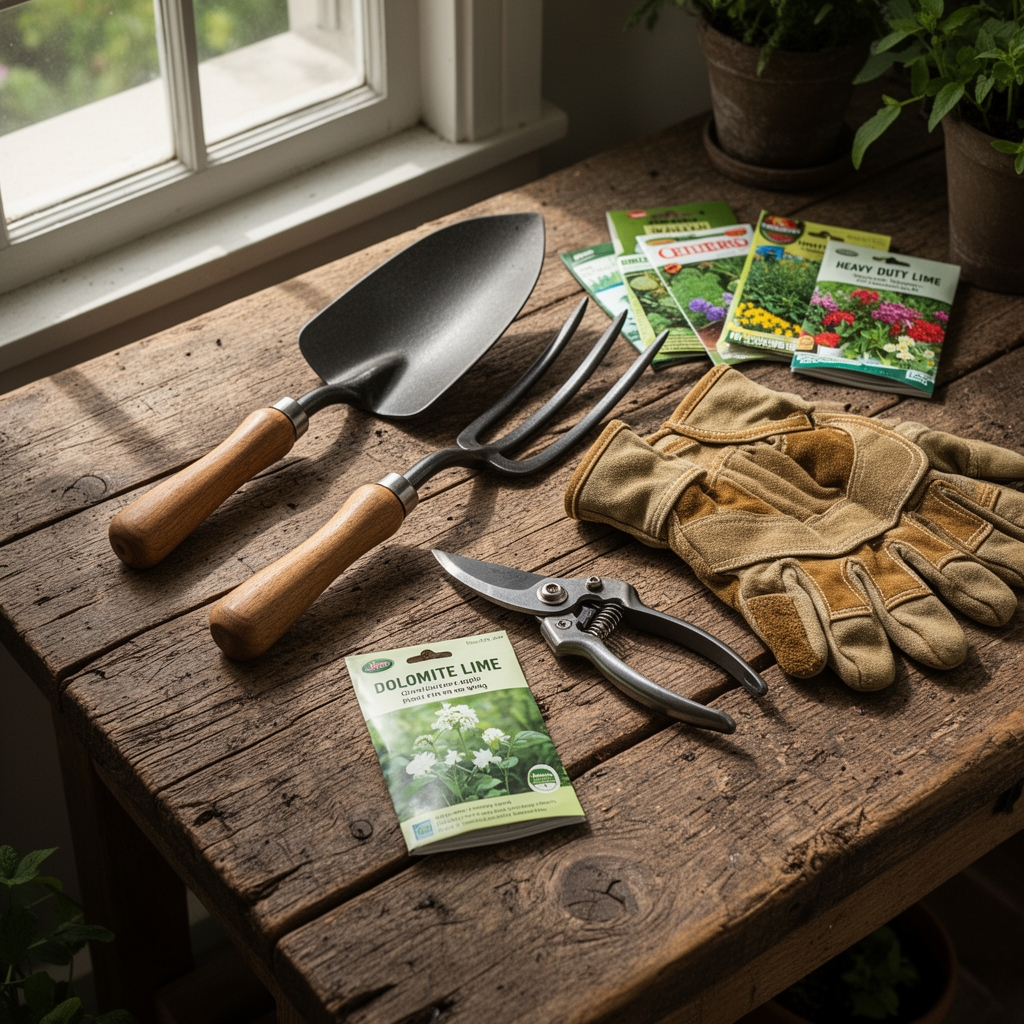
You will need a broadcast spreader for lawns or large beds, a drop spreader for precision work, and a soil rake. Wear a dust mask rated N95 or higher if you handle powdered lime. For vegetable gardens that rely on organic amendments such as 4-4-4 feather meal or 5-5-5 fish-bone-kelp blends, dolomite integrates seamlessly because it does not add synthetic nitrogen. Acid-loving crops require no lime; reserve dolomite for brassicas, legumes, and alliums that thrive between 6.5 and 7.0 pH.
Timing
Apply dolomite lime in autumn, at least 90 days before spring planting. This interval allows the carbonates to react fully with soil colloids. In USDA Hardiness Zones 3 through 6, schedule application between late September and early November, after harvest but before the ground freezes. Zones 7 through 9 benefit from October through December applications.
Spring application remains viable if you missed the autumn window. Spread lime 60 days before your last expected frost date. Incorporate it immediately to jump-start the neutralization reaction. Avoid liming within two weeks of applying high-nitrogen fertilizers; the pH shift can volatilize ammonia and waste costly inputs.
Phases
Sowing Phase
Test soil pH in multiple locations across each bed. Calculate the lime requirement using the formula your lab provides, typically expressed in pounds per 1,000 square feet. For every 0.5 pH unit you need to raise, apply 50 pounds of dolomite per 1,000 square feet on loamy soil. Sandy soils require 30 pounds; clay soils demand 70 pounds because of higher cation exchange capacity.

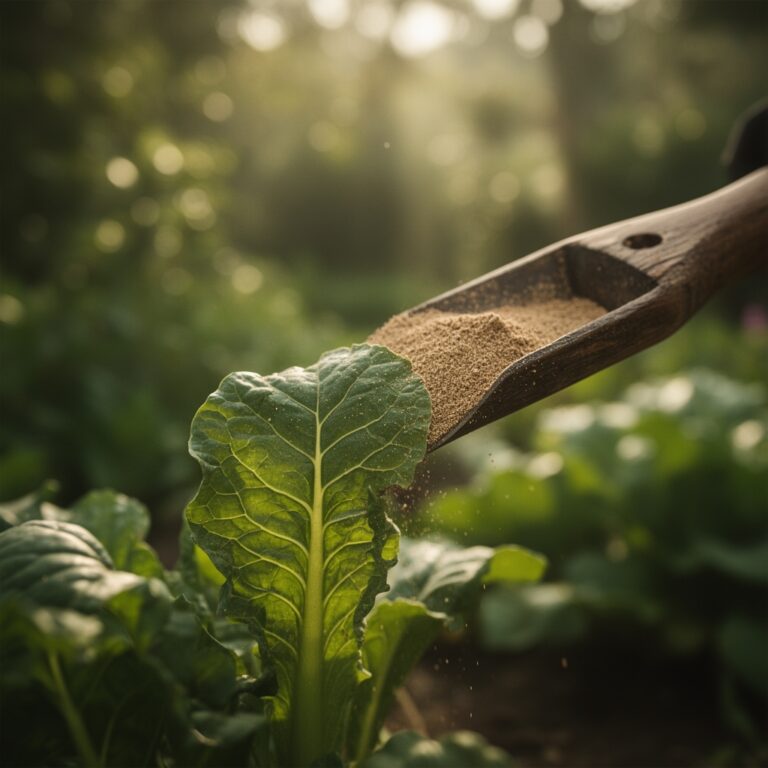
Broadcast the calculated amount evenly. Set your spreader to the medium-flow gate, walk at a steady three-mile-per-hour pace, and overlap passes by six inches. Rake the lime into the top four inches of soil. Water lightly with 0.25 inch to initiate contact between lime particles and soil moisture.
Pro-Tip: Inoculate legume seeds with Rhizobium bacteria immediately after liming. The elevated pH activates nodule formation, boosting atmospheric nitrogen fixation by 40 percent.
Transplanting Phase
Retest pH 60 days after the initial application. Dolomite moves slowly through the profile; the top two inches will show the greatest change. If pH remains below target, apply a maintenance dose of 20 pounds per 1,000 square feet. Till shallowly to avoid damaging feeder roots of existing perennials.
Transplant seedlings once soil temperature reaches 55 degrees Fahrenheit. The magnesium in dolomite supports chlorophyll synthesis, so seedlings green up within 10 days. Monitor leaf color and vein structure. Dark green leaves with pale interveinal tissue indicate iron lockout, a common overcorrection when pH exceeds 7.2.
Pro-Tip: Foliar-spray transplants with 1 tablespoon Epsom salt per gallon of water if magnesium uptake lags. The sulfate form bypasses soil pH and delivers magnesium directly to leaf tissues.
Establishing Phase
Mulch beds with two inches of shredded hardwood bark after transplanting. Mulch moderates the pH rebound that occurs when organic matter decomposes. Dolomite continues to neutralize acidic byproducts from microbial respiration, stabilizing pH near 6.8.
Feed established plants with compost tea every 14 days. The humic acids in compost chelate calcium and magnesium, improving root uptake by 25 percent. Side-dress brassicas with 1 cup per plant of 4-4-4 organic fertilizer at the six-leaf stage to support head formation.
Pro-Tip: Prune suckers at a 45-degree angle on indeterminate tomatoes. The improved auxin distribution channels calcium to developing fruit, reducing blossom-end rot incidence by 60 percent.
Troubleshooting
Symptom: Yellowing leaf margins on beans and peas.
Solution: Magnesium deficiency despite recent liming indicates potassium excess. Apply 0.5 pound of langbeinite per 100 square feet to balance cations.
Symptom: White crust on soil surface after watering.
Solution: Excess lime application. Leach beds with two inches of water weekly for three weeks. Incorporate sulfur at 10 pounds per 1,000 square feet to lower pH by 0.5 unit.
Symptom: Stunted growth with bronze leaf tips in acid-lovers.
Solution: Dolomite drift from adjacent beds. Install six-inch plastic edging and top-dress acid beds with elemental sulfur at 5 pounds per 1,000 square feet.
Symptom: Powdery residue on lower leaves.
Solution: Lime dust contamination during application. Rinse foliage with a strong water spray. Switch to pelletized lime for future applications.
Maintenance
Water newly limed beds with 1 inch per week. Deep irrigation carries dissolved calcium and magnesium into the root zone. Install a rain gauge to track natural precipitation. Retest soil pH every 24 months. Most soils acidify naturally through leaching and organic-matter decomposition. Plan to reapply dolomite every three to four years at half the original rate.
Side-dress perennials each spring with 2 inches of aged compost. The organic matter buffers pH swings and sustains the cation exchange capacity that holds lime-derived nutrients. Rotate annual crops to prevent localized nutrient depletion.
FAQ
How long does dolomite lime take to work?
Soil pH begins rising within 30 days. Full neutralization requires 90 to 120 days depending on particle size and soil moisture.
Can I apply dolomite lime and fertilizer together?
Separate applications by 14 days. Simultaneous application can cause nutrient tie-up and ammonia volatilization.
Will dolomite lime harm mycorrhizal fungi?
No. Most mycorrhizae tolerate pH ranges from 5.5 to 7.5. Moderate liming enhances fungal colonization by improving root health.
Is pelletized lime worth the extra cost?
Yes. Pellets reduce dust exposure by 90 percent, improve application accuracy, and break down steadily over 60 days.
Can I use dolomite lime on potted plants?
Mix 1 tablespoon per gallon of potting mix before planting. Avoid top-dressing containers; uneven pH zones stress confined roots.